

Welcome to the No-BS OKRs™ Blog
Here, you’ll find resources we create to help teams create, implement, and operationalize No-BS OKRs™ (called Evolutionary OKRs® in some workplaces) to set clear goals, stay focused, and build cultures of growth, learning, and high performance.
Featured No-BS OKRs Posts


Newest Thinkydoer Podcast Episodes


Posts by Category
Principles of No-BS OKRs

Leadership + Management
All posts about Leadership & Management →
Strategic Planning


All posts about Strategic Planning & Goals →
OKR FAQs


All No-BS OKRs FAQs →
OKR Coaching

All posts about OKR Coaching →
OKR Case Study: The $50K Status Report Pageant
This Fortune 500 division had great OKR training. So why weren't their OKRs working? What happens when you spend heavily on OKR training but your quarterly reviews are still expensive "talking circles?" This case study shows what changed when a client stopped focusing their entire OKR effort on "writing better OKRs" and started changing how people behave in order to improve performance.
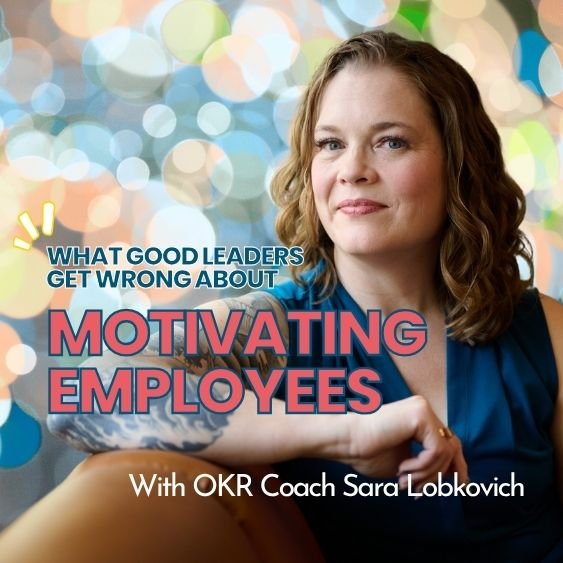
How to Motivate Employees: What the Research Shows
Too many leaders default to thinking they need to eliminate employee dissatisfaction to boost motivation. The truth? Removing dissatisfaction doesn't automatically create motivation. And the widely-held belief that stretch goals are "demotivating" if they're not achieved is not only wrong—it's actively harmful to employee engagement. Discover the three psychological needs from Self-Determination Theory that actually drive motivation, and a few practical frameworks you can use immediately—including the three questions that unlock employee engagement and a “Three-hat” leadership model for sustained motivation.

“Quiet Quitting” and the “Great Detachment” Reflect Your Culture, Not Your Workforce
“Quiet quitting” isn’t over — recent Gallup Data shows that the “Great Detatchment” is still going strong. Learn how No-BS OKRs can counter this trend, fostering a more engaged and motivated workforce and management.

Expand your leadership toolkit with assessments
I’ve always found assessments helpful not only for personal development and self-knowing, but also for helping organizations develop a shared language around important topics in how we work together. I am a huge supporter of using assessments personally for self-discovery and increasing your understanding about yourself, your default modes, and non-default options for behavior. Here, I share the assessments I use most frequently in my coaching and consulting …
The #1 question organizations ask about OKRs? "How do we cascade them to every team and person?" After training 2,000+ OKR coaches across 300+ organizations, my answer is controversial: You don't. Traditional OKR cascading creates a "mathematical nightmare"—turning 4 company objectives into 100+ unmanageable goals. There's a better way: flexible localization that helps teams align through a simple 3-question framework without drowning in complexity. Learn why cascading fails, when teams need different goal tools, and how to implement team OKR alignment that actually works.